
What is influencing office, retail and industrial property at the start of 2026?
 There were positive signs across each of the major asset classes in the Australian commercial real estate market across 2025, yet recovery has been ‘asset specific’, according to Benjamin Martin-Henry, Head of Private Assets Research, Pacific at MSCI.
Martin-Henry discussed office, retail and industrial property during a recent PFA Podcast in Property discussion with Greg Preston, Managing Director of Preston Rowe Paterson.
“There are enough individual deals being done to kind of give people a bit more confidence the market is turning”, Martin-Henry said.
Yet while there is a lot of positivity in the world, he said some hesitancy remains. “In the GFC, everything went down but everything came back up again. This time around, everything has gone down but not necessarily everything has come back up again.
“We’re looking at recoveries being incredibly deal specific, asset specific.
“Not just sector, not just market, it comes down to streets and assets. It’s quite a different recovery profile.”
Greg Preston said an influential factor at present is the cost of building new assets relative to buying existing ones. “Look at what it costs to create a new asset at the moment versus buying one that’s old … what’s making it so difficult to get new assets off the ground is build costs relative to value as if complete.”
He referred to two recent office building sales – Grosvenor Place in Sydney, and the Flinders Gate complex in Melbourne. “Just those two are $20,000 - $22,000 per square metre. In Sydney, $20,000 is not enough to build you a new asset. It’s difficult to get things going still.”
Martin-Henry agreed, and said one of the most common terms being used in the market today is “bought below replacement” due to high construction costs.
“Buying is the easiest way, or really the only way, to get into the office market if you don’t have anything. But that lead on supply will support rental growth.”
Glimpses of recovery in mixed office market
Office rent forecasts in Sydney are mixed, Preston said: “The northern end of the city around Circular Quay is doing incredibly well, probably as well as it ever has. It’s probably got the lowest incentives in the market. But the minute you move away from that to the southern end of the city, or to the peripheral metropolitan locations… office is tough, still.”
In the Melbourne office market, Martin-Henry said some momentum in transactions has emerged. “Maybe we’re finally starting to see a resurgence in that market after a lot of pain for the last 24 months. So I’ll give Melbourne a bit of a shout out – finally, something positive is happening down there”, Martin-Henry said.
The imposition of extra taxes, as seen in Victoria, hurts the bottom line of an investor, particularly when they don’t have net leases and the extra taxes can’t be passed on to tenants, according to Preston.
Yet Martin-Henry said it looked like prices had adapted to this reality. “Because you’re effectively 7 or 8% worse off buying an office in Melbourne than buying in Sydney, and the pricing hadn’t reflected that.
“Pricing needed to adjust enough to account for all those tax issues, and I think that has had to feed into people’s decisions to start buying now for sure.”
Retail a positive story
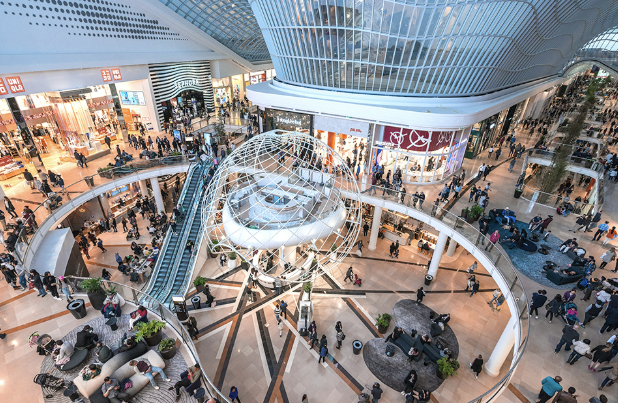
Martin-Henry said the high cost of building should support retail rental growth. “We are very undersupplied for retail – we have 1.2 square metres per person where the USA has 2.4. It’s hard to get planning to build retail, it’s hard to make retail stack up, so there’s always a cap on supply.
“I think retail is a bit of a positive story at the moment and I’d be surprised if we don’t see continued rental growth.”
He said retail is finally seeing a bit more love in the major shopping centre space. “[Retail] is good because it has hit a bottom, in 2018, and then we hit another bottom with Covid, and then we hit more of a bottom with the latest structural shifts, so it’s continually going down so it does look pretty cheap at the moment.
“I think we are starting to see a little bit of retail rental growth. And it is very much asset specific. I think we saw positive rental growth in the neighbourhood shopping centres, even the sub-regionals and the large format retail. They seem to be okay anyway throughout this last five years or so.
“Footfall has increased. There’s a lot of refurb as well going on. So clearly these guys are positioning themselves for a bit of an uptick.”
Preston agreed that signs of improvement was starting to show. “There have been some interesting transactions, including Westfield in Chermside, Macquarie Centre Sydney, Northlands in Melbourne, and Roselands Shopping Centre.”
Industrial link with economy
Martin-Henry said industrial property yields look tight when compared to other sectors: “Because there was no significant repricing in that industrial space, yields still look very tight compared to bond rates in particular, but also compared to the other sectors.
“So I’m not surprised to see a little bit of a slowdown in the industrial space. But in terms of our numbers industrial is still up for the year”, Martin-Henry said.
Preston raised the importance of a sound economy when evaluating industrial property. “As the economy picks up – when the economy is doing well, and people are buying both discretionary and non-discretionary goods, it keeps the warehouses full and it also keeps retail going”, Preston said.
Martin-Henry agreed. “It’s very much tied to what people are buying. If the economy picks up and people are feeling a little bit better about where we’re headed then they will spend more and we probably will see an uptick in industrial rents.
“I think even the most positive of broking firms out there aren’t saying we are going to see 25% rental growth in the industrial space anymore. I mean, that was an amazing blip and certainly something we haven’t seen previously”, Martin-Henry said.
Preston agreed, adding he expected more stable rental growth around 3-5% on average: “When I started my career a low yield meant high rental growth, but now low yields these days are just a rising tide of capital chasing the same asset class.
“And the capital tide is rising, with compulsory super in this country – the quantum of capital that comes through the superannuation guarantee without extras each year, it’s just a tide of capital that has to be deployed, and 10 to 12 per cent usually finds its home in direct and indirect real estate in some way, shape or form”, Preston said.
PFA members benefit from access to networking and educational opportunities, industry research, and greater connection with the unlisted property funds industry – click here to find out more.