
Australia relatively well placed for commercial property performance in Asia-Pacific region: David Green-Morgan
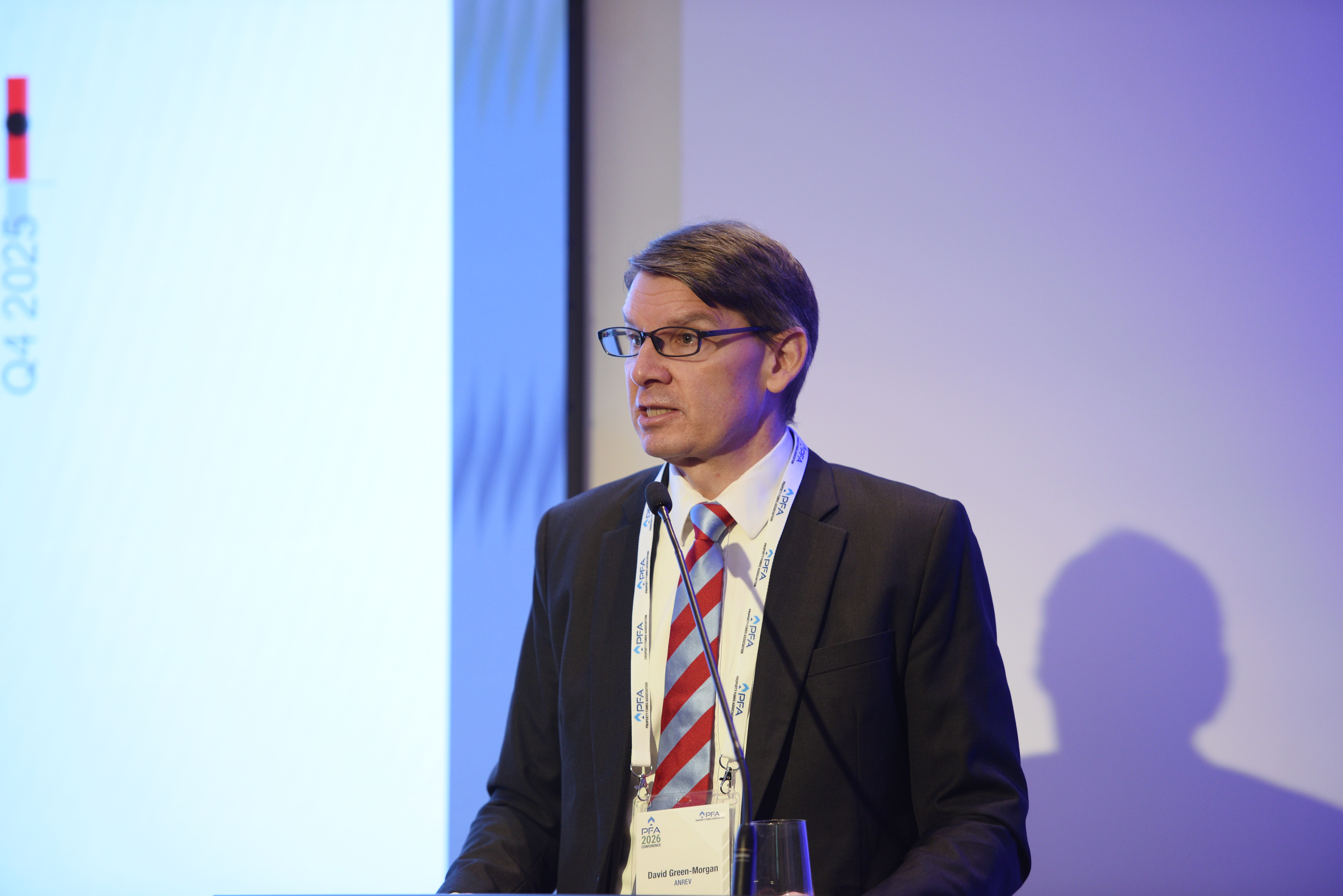 Australia’s commercial real estate market is currently an outlier in the Asia Pacific region, according to David Green-Morgan, Director Research and Professional Standards at ANREV, the Asian association for investors in non-listed real estate vehicles.
Mr Green-Morgan delivered an update on global real estate trends at the recent PFA 2026 Conference in Adelaide, with a key focus on the Asia Pacific. “Australia is definitely the outlier in the region. We’ve seen a lot of repricing happen in Australia, and I think that’s encouraged quite a lot of the capital to come into this market.”
He said that while transactional volumes picked up during 2024 and 2025 in Australia, yields have continued to stay relatively high within Australia. “This is probably going to benefit the market, because we’re seeing continued yield compression in Japan, which is Australia’s biggest competitor for global capital at the moment. Japanese pricing continues to get more and more expensive.
“The heartening thing for this part of the world is that Asian institutions are still quite a long way away from where they want to be in terms of real estate allocations.
“Over the next 15 to 20 years the institutional capital in Asia Pacific is going to surpass that of Europe and North America. The compulsory superannuation and pension contributions are something that’s repeated in China, Japan, and Korea. We’ve got it in Singapore. We’ve got it in Hong Kong.
“Those funds are just growing and growing as populations grow, as salaries grow, so they will become bigger and much more influential.”
Green-Morgan said that while diversification remains a key motivator for investors to allocate into commercial real estate, there is some harmonising of returns globally at present. “The geographical diversification story is losing a little bit of steam at the moment because it’s actually quite hard to find a geography that’s really dramatically outperforming other parts of the world.”
When looking ahead to what’s going to drive real estate performance over the next few years, Green-Morgan said it’s coming back to the core elements of why many institutional investors look at real estate. “It’s because of that consistent cash flow driver, those consistent distributions and that income growth. Because the capital side looks increasingly uncertain, as we’re likely to see higher interest rates in many advanced economies later this year.
“One of the big positives for commercial property is that it is difficult to build globally, not only construction costs, but getting planning approval, getting labour is increasingly difficult.
“When we look at those demand supply dynamics, the fact that there isn’t much supply coming out of the ground in most parts of the world, and particularly the developed markets, is going to play into that positive income story.
“We should see continued rental growth, even if the demand side does slow a little.”
He said while not as much money is being raised, not as much money is being spent either. “There’s quite a lot of dry powder on the sidelines at the moment. And the biggest single issue for why people have not spent the money is because of market conditions, which, of course, have not improved over the last couple of months.
“It’s likely that we’re going to continue to see this store of capital build for commercial real estate around the world, and it’ll be interesting to see what really triggers a big surge of that capital to come back into the sector”, Green-Morgan said.
PFA members benefit from access to networking and educational opportunities, industry research, advocacy, and greater connection with the unlisted property funds industry – click here to find out more.