
AI and property funds: What separates the winners from the strugglers?
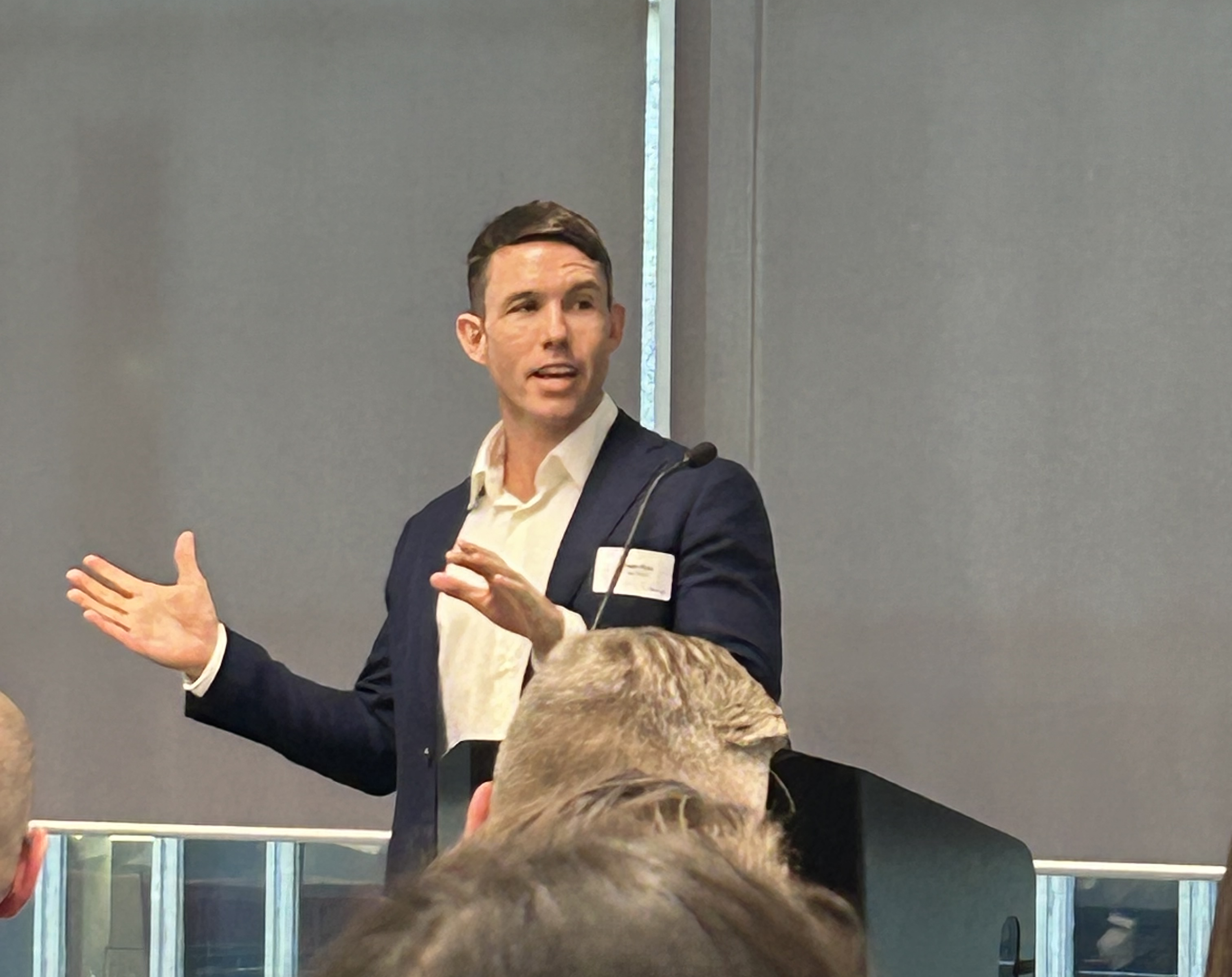 Property funds must look beyond technology alone and consider their systems, data and workplace behaviours to get real value from artificial intelligence, according to AI expert Regan Kirk, Founder of specialist AI consultancy Impact First AI.
Mr Kirk spoke about the differences between organisations succeeding with AI and those struggling to generate value as part of the Property Funds Association of Australia 2026 Master Class Series, held in Sydney, Brisbane and Melbourne.
“Rolling out AI is as much a behaviour-change challenge as it is a technology challenge,” Mr Kirk said.
“Many property funds have rolled out Copilot but haven’t seen a meaningful return on investment. Part of that is the capability of the tool, part is how well people know how to use it, and part is the environment around it: poor data, disconnected systems, and expensive people still acting as the glue between them.”
The speed of change across AI applications means that many aren’t aware of what’s already possible, Kirk said. “AI is no longer just about tidying emails and summarising documents. Today’s models can run automated research, analyse deals like a property analyst, triage inboxes and monitor compliance.”
A key part of generating value from AI, Kirk said, is understanding the difference between AI adoption and AI skill. “Adoption is binary: are you using the tool or not? Skill is a spectrum.
“Most people haven’t received role-specific training or ongoing support, so even where adoption is high, skill levels can remain relatively low.”
Organisations seeing the most value from AI also tend not to start with the technology. They start by identifying the problem they are trying to solve. “The organisations getting this right run two tracks in parallel.
“First, they build AI fluency by giving people access to the best tools, role-specific training, the right incentives and ongoing support.
“At the same time, they redesign their costliest workflows. They start with the problem and audit the process, rather than starting with AI.”
Key differences between AI success and struggle
Kirk said one common mistake is judging today’s AI based on an experience with an earlier generation of the technology. “When generative AI first arrived, the outputs could be pretty ordinary. The technology has moved quickly since then.
“The organisations getting value from it are regularly testing new models on real work rather than assuming their first experience is still representative.”
Another major barrier is fragmented and unreliable data. “AI doesn’t magically fix bad data.
“The organisations making progress are creating trusted, accessible sources for their critical data. They are moving away from disconnected systems and towards environments where important data sources are connected through a central data platform.
“The goal is to stop relying on people as the glue between systems and create a trusted single source of truth. Dashboards, automation and AI can then sit on top of that foundation.”
Ownership is another important difference. Some organisations run a series of ad hoc AI pilots without clear accountability, while those making progress tend to follow a more structured approach.
“They assign an owner, define the problem and validate the solution quickly.”
Kirk said another common mistake is assuming AI should be the answer to every problem. “People get excited about AI and suddenly everything starts looking like an AI problem. That’s not a great way to approach it.
“You want to understand the problem first, then choose the best solution. Sometimes that will be AI. Sometimes it will be process improvement, automation or better data.”
Identifying the organisation’s costliest and most frustrating workflows should therefore be a priority. “You need to map out the workflow, and this often takes much longer than people expect.
“If you can’t clearly explain how the work is done today, where the exceptions are and where things go wrong, you’re unlikely to build a good solution, whether that solution uses AI or not.”
Where property funds should start
For property funds looking to make meaningful progress with AI, Kirk said the starting point can be relatively straightforward.
“Choose an enterprise AI platform that suits the way your organisation works. Test the leading tools, including ChatGPT and Claude, on your actual work rather than relying on generic benchmarks.
“Then create knowledge bases around your most important areas of work, so AI can work with the right organisational context.
“From there, take the handful of your most repeated or expensive processes, document the steps and embed the relevant instructions and checklists into repeatable AI workflows.
“You don’t need to transform the entire organisation at once. Start with the work that matters most, prove the value, and build from there.”
Regan Kirk explores AI for property funds in more detail here
PFA members benefit from access to networking and educational opportunities, industry research, and greater connection with the unlisted property funds industry – click here to find out more.